
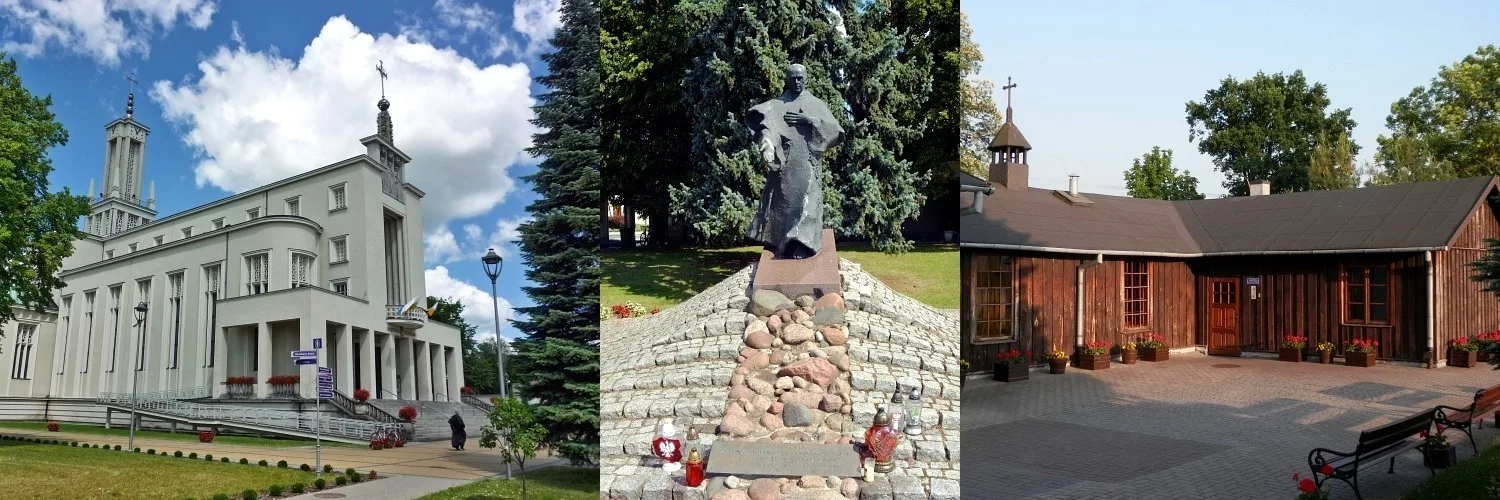
„There Was a Man” – Museum of St. Maximilian (e-guide)
While visiting Niepokalanów, it’s worth stepping into the Museum of St. Maximilian, which invites pilgrims on a journey through time. It all began in an empty field where, in the summer of 1927, a modest statue of the Immaculate Conception was erected. From those visionary and arduous beginnings emerged an imposing Franciscan friary and publishing complex – one of the largest of its kind before the outbreak of World War II. The museum, entitled „There Was a Man” is housed in a historic building that once served as the friary’s laundry and carpentry workshop. It was consecrated by cardinal Józef Glemp and opened to the public in August 1998.
* Niepokalanów. Life and Vision of the Founder
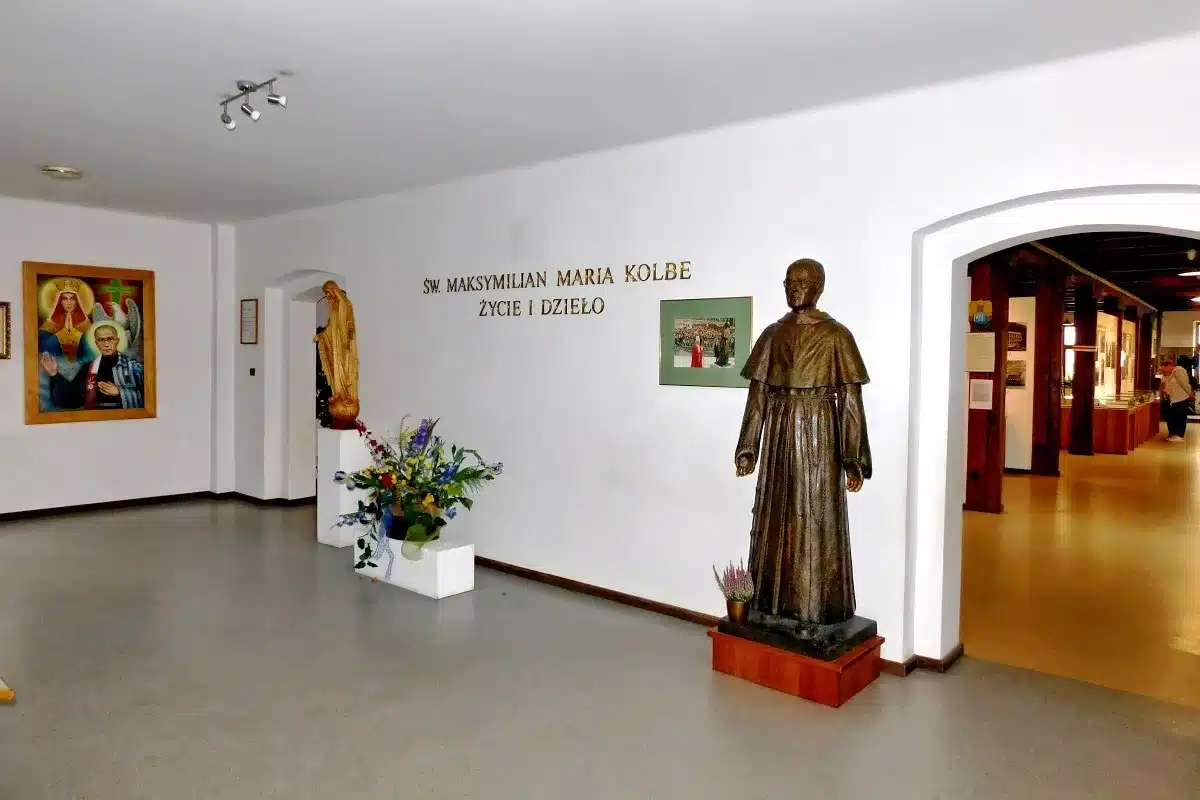
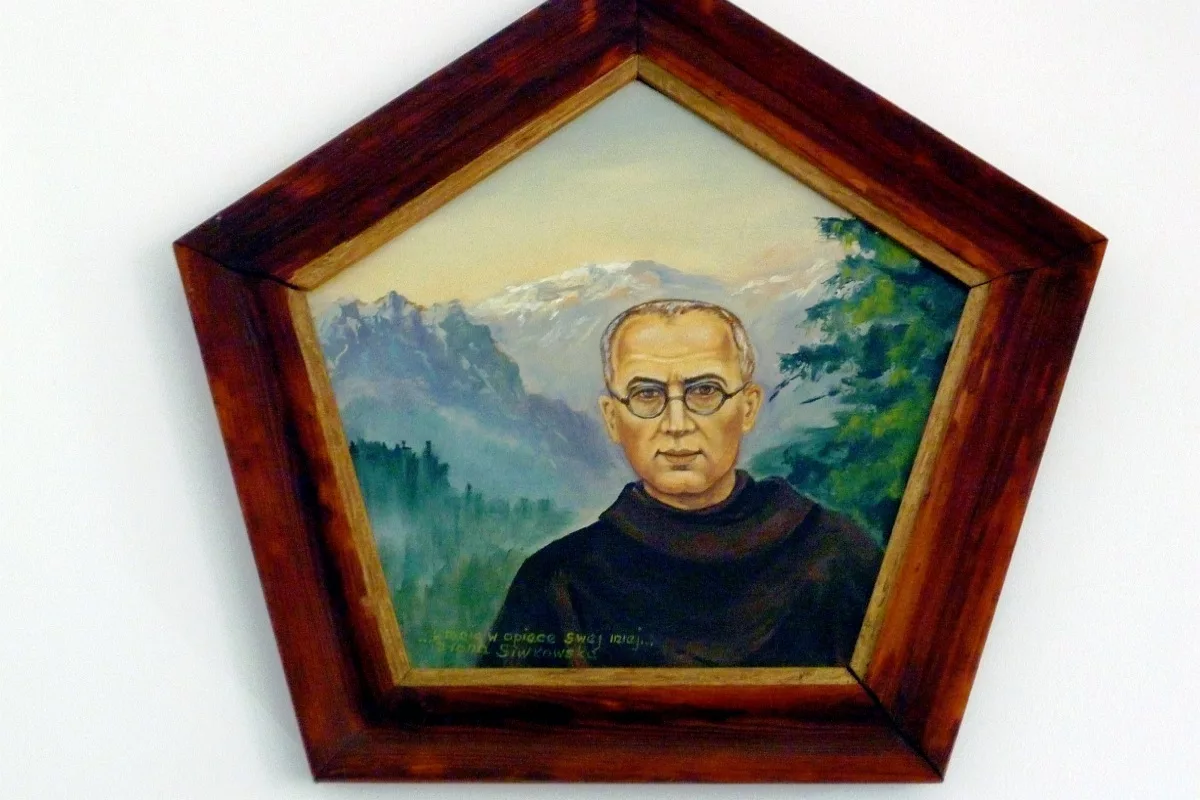
In the first room, which recounts the history of the friary, pilgrims are greeted by the founder himself – St. Maximilian Kolbe. His bronze statue, crafted by the Italian sculptor Roberto Joppolo of Viterbo, was blessed by Pope John Paul II during the canonization ceremonies in October 1982. This statue was later made in several copies and sent to Poland, Japan and America.
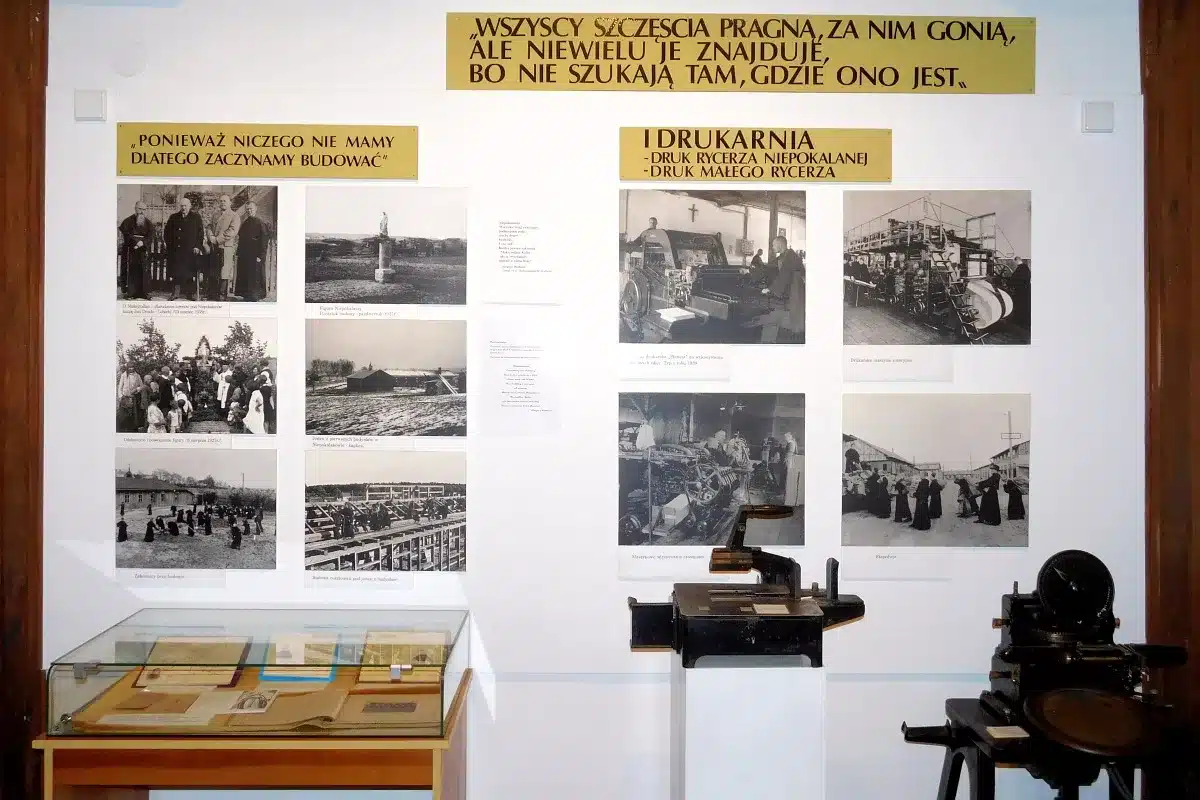
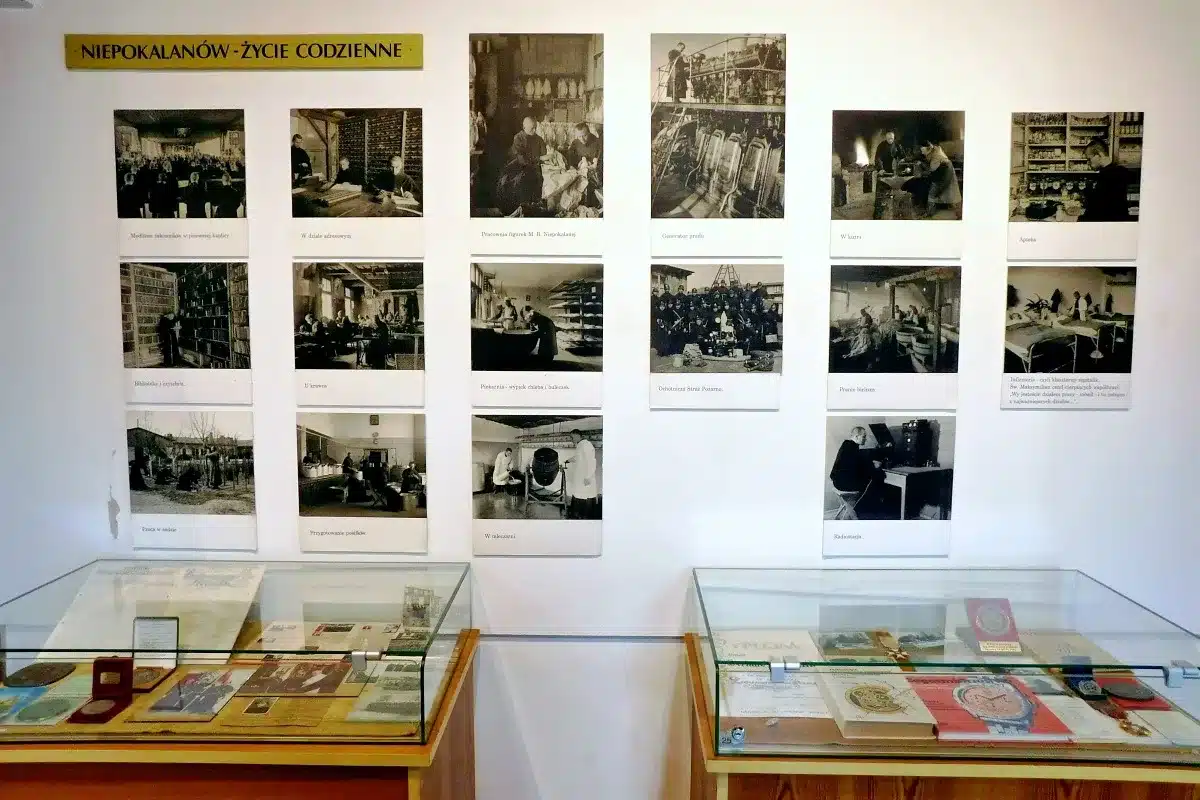
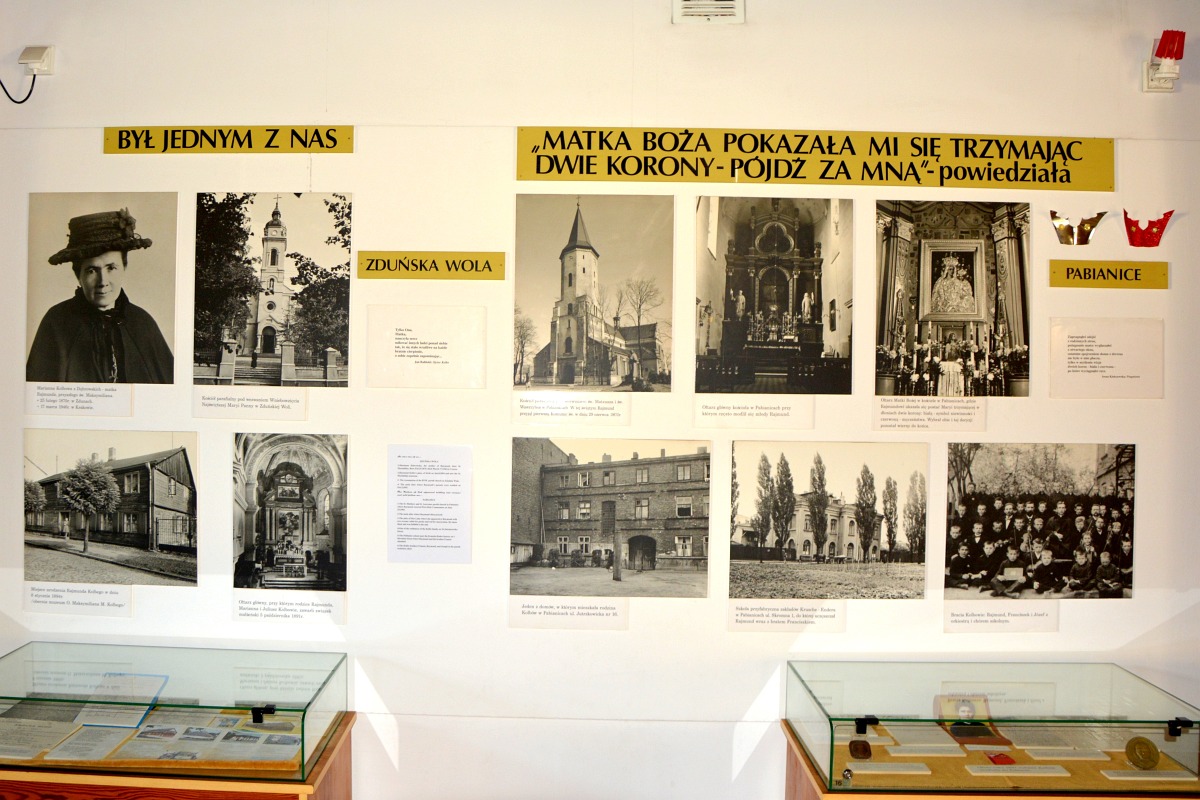
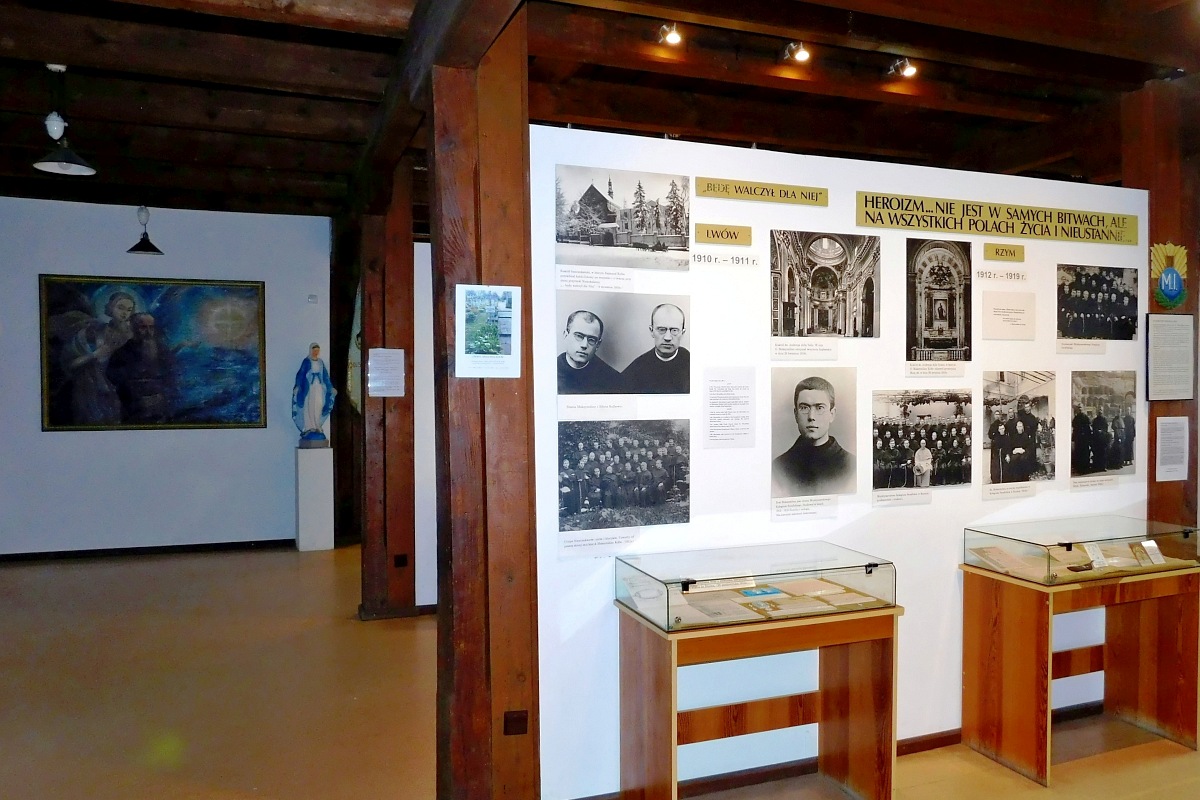
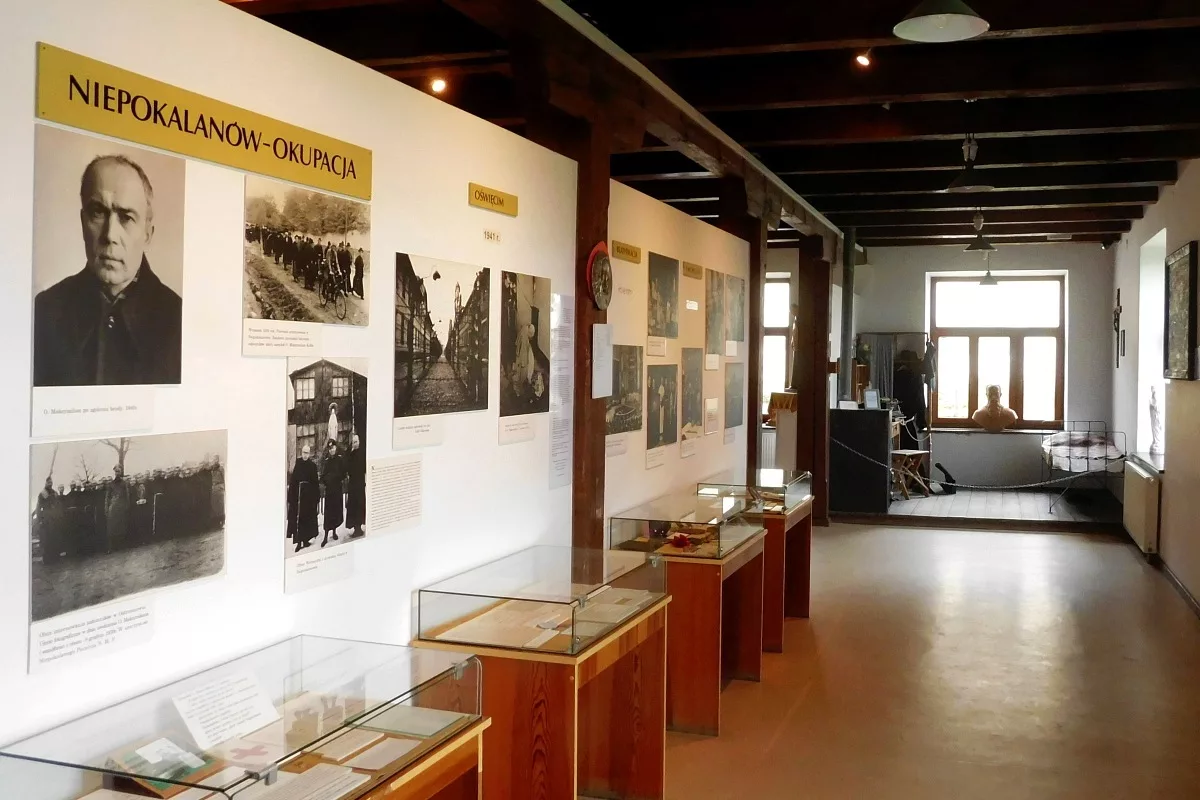
Crossing into the next hall, we are going back in time to the early 20th century. Reproductions of pre-war photographs depict the life of St. Maximilian – starting from his childhood and youth through his studies, to his publishing and missionary work in Poland and Japan. Further archival materials document the step-by-step creation of the great publishing friary known as Niepokalanów. It is remarkable to observe how efficiently the entire complex was managed in terms of logistics, featuring a modern printing house and its own Volunteer Fire Department.
* Missionary Section: Japan and Other Countries
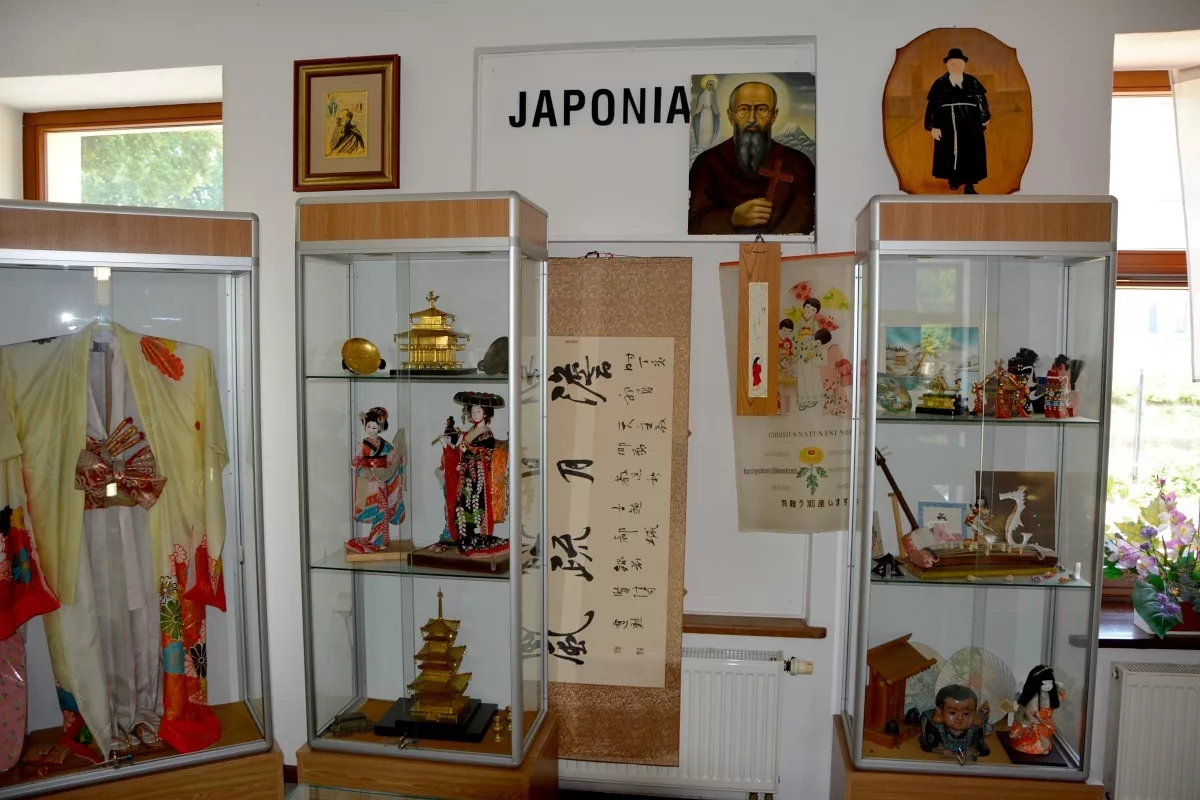
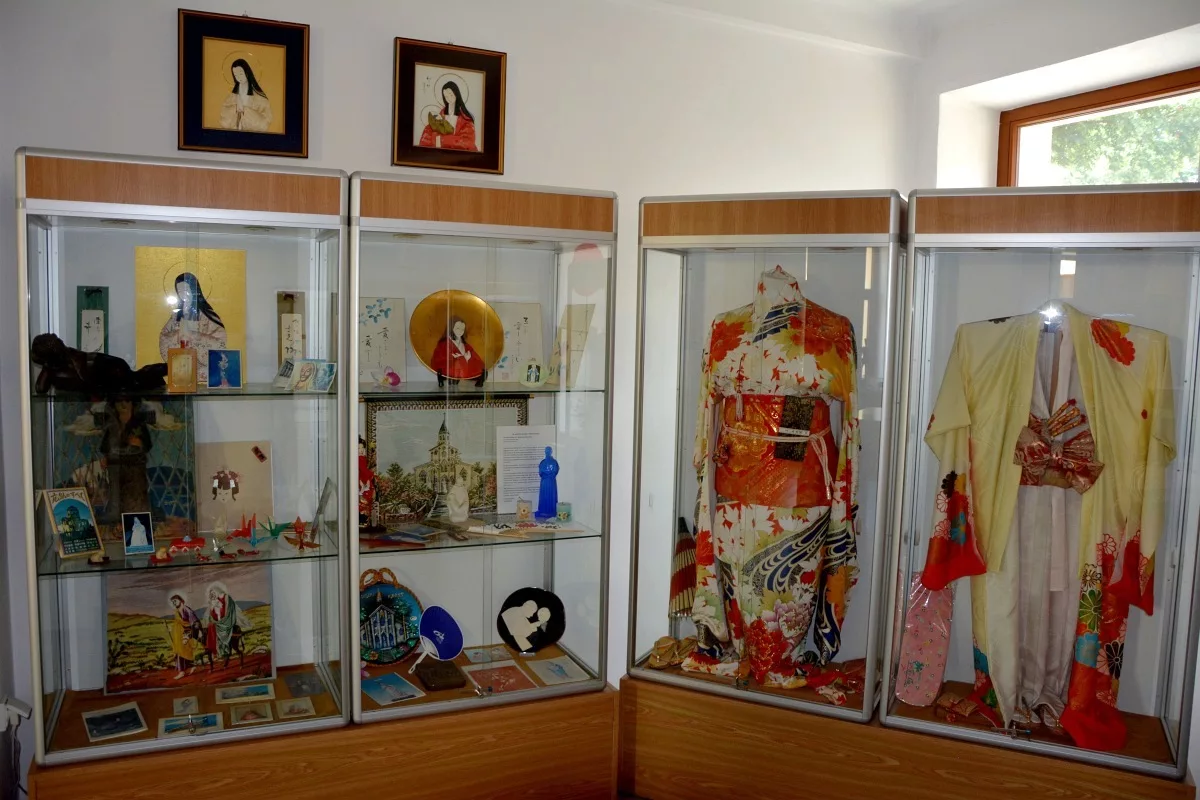
The next part of the exhibition carries the visitor on a long journey to Asia (precisely to Japan, and not only). It is here that the museum reveals the missionary face of father Kolbe. In Nagasaki, father Maximilian founded a new friary, named „Mugenzai no Sono” (The Garden of the Immaculate); it was also in Nagasaki that the Japanese edition of „The Knight of the Immaculate” (Seibo no Kishi) was born. The witnesses to those times are not only the gathered everyday objects and memories from the Far East. Preserved letters and photographs give us a history lesson, illustrating the hardships of adaptation in an environment so culturally distinct from Poland.
In addition to the „Japanese” section, the mission hall showcases exhibits from many other countries where Franciscan missions have flourished, including Brazil, Zambia, Peru, and Tanzania. Most of these items were brought back by the missionaries serving there. Among the more intriguing objects are a dried piranha, a sombrero hat, and an image of the Mother of God intricately woven from cereal grains.
* Wartime Period. Posthumous Fame of Father Kolbe
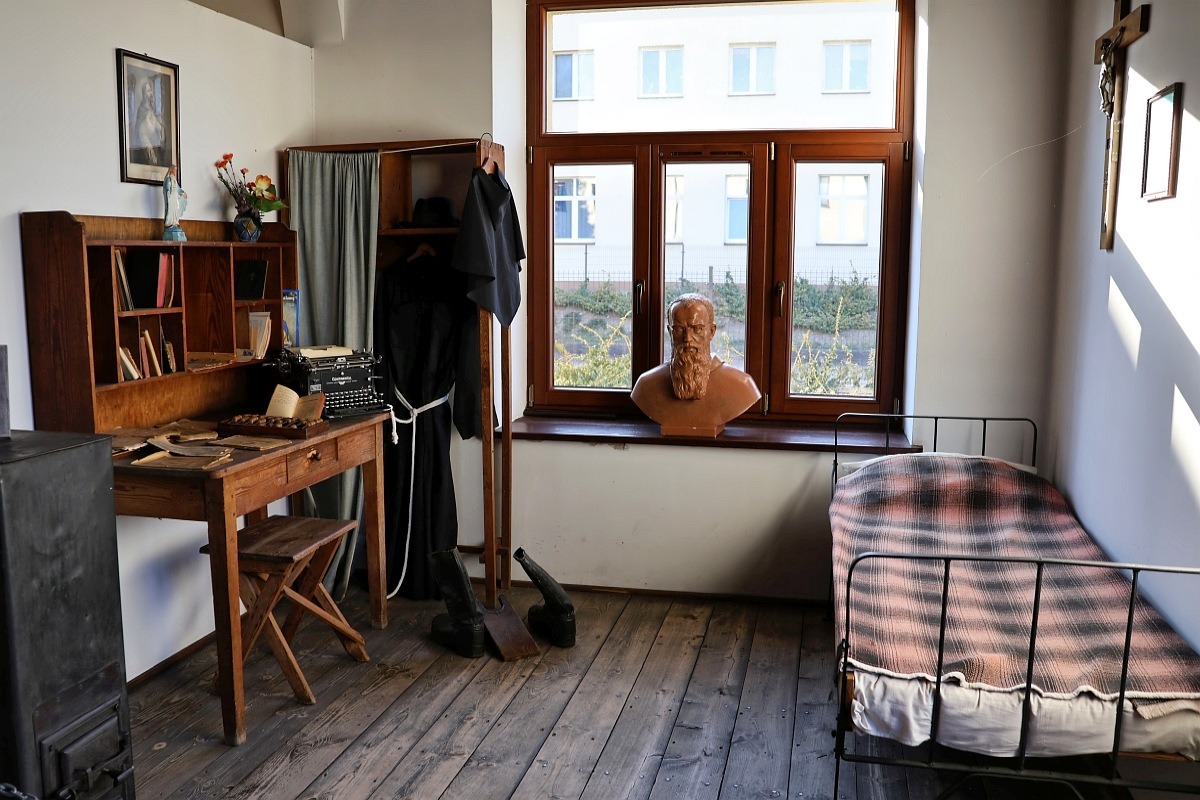
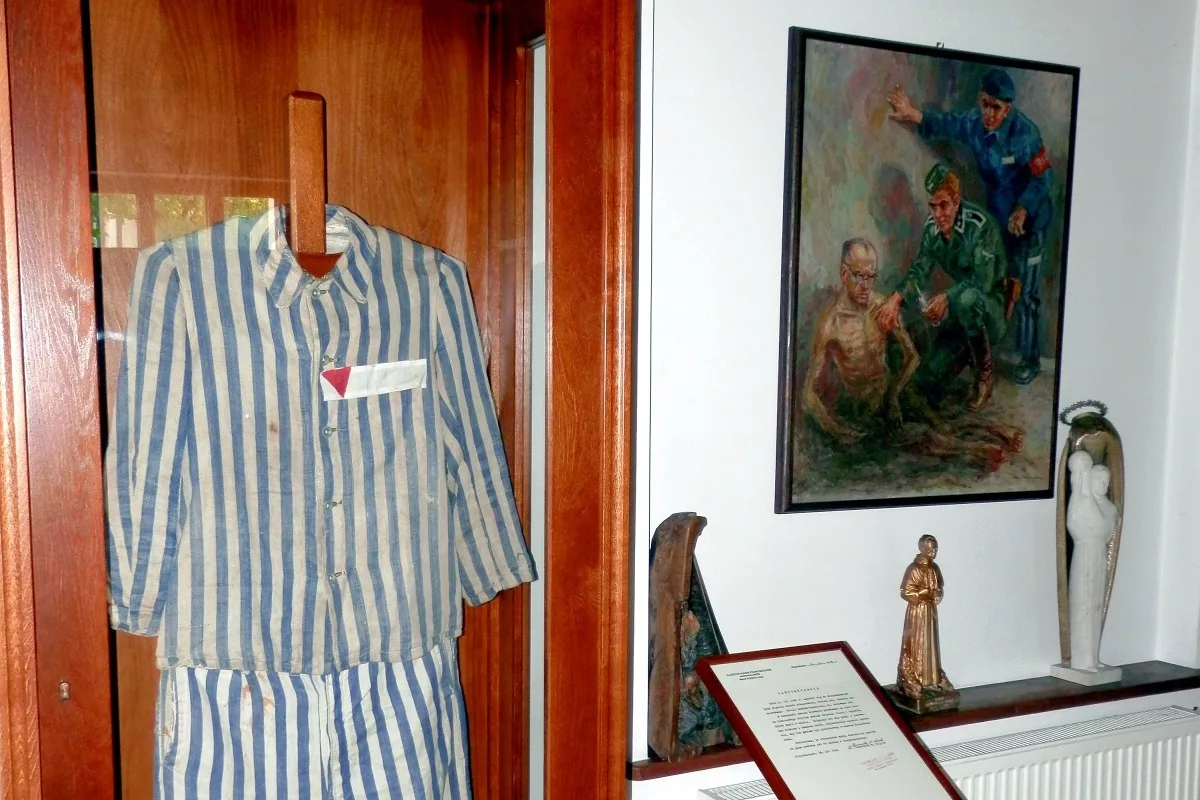
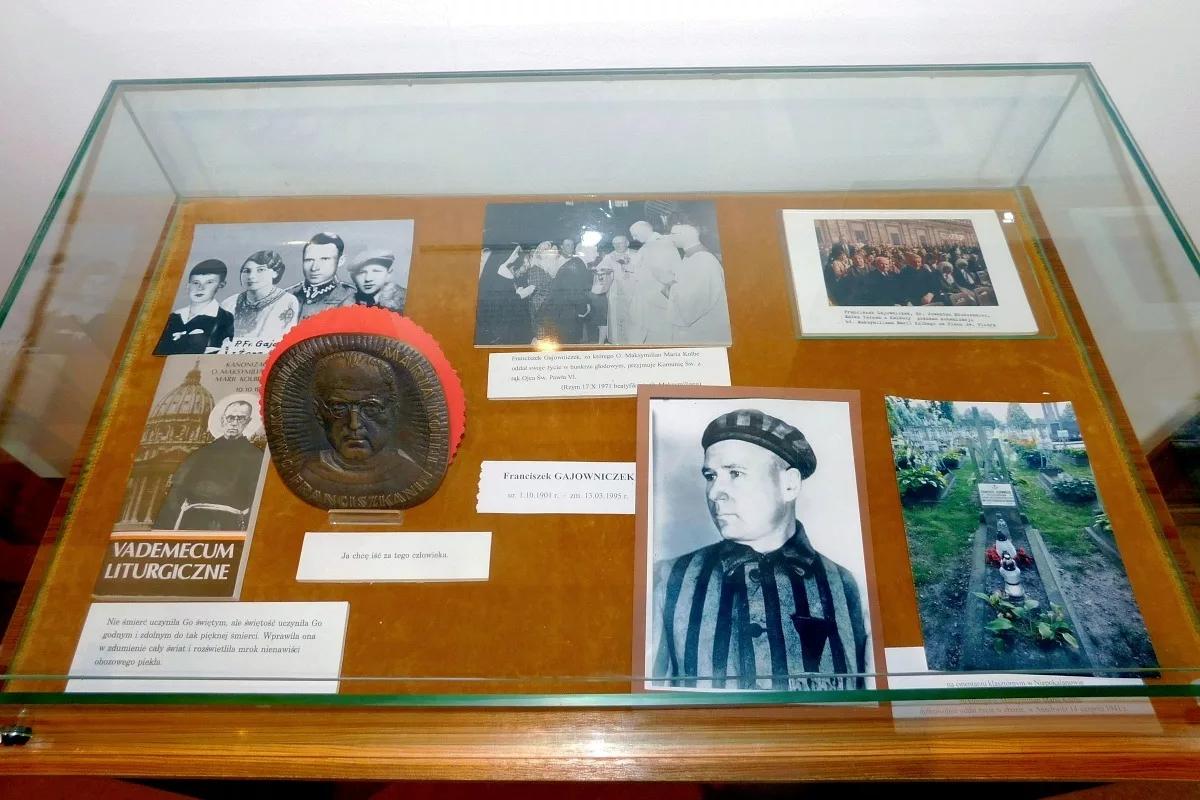
The final stage of the museum is the most poignant. It features a replica of St. Maximilian’s second monastic cell, where he lived from his return from Japan (mid-1936) until the day of his arrest (February 1941). Here, mementos from the Second World War are gathered: a prisoner’s striped uniform, personal effects, and paintings by former inmate Mieczysław Kościelniak, documenting the daily reality of life in Auschwitz. It is also worth noting that during the war, Niepokalanów served as a place of refuge for many people in need – wounded soldiers, war refugees, and 1,500 displaced Jews, to whom the monastery provided shelter and sustenance.
Yet, the exhibition does not merely overwhelm with the suffering and sacrifice of father Maximilian’s life for another. Mementos showing his posthumous fame and his proclamation as a saint by the Polish Pope (October 10, 1982) demonstrate the triumph of the spirit even within the hell of a concentration camp. Maximilian – priest, friar, media publisher, missionary, and martyr – walked through life according to the motto that guided him: „I must be a saint – as great as possible.”
* Some quotations from the Visitors
The visitors left some writings in the museum’s Guest Book. Herewith a few quotations:
– I have seen the museum for the first time and now, I am able to look at my life differently. I have learnt about the events os St. Maximilian’s life, which I have never heard before. Thank you for such a lesson.
– We have deepened our knowledge about St. Maximilian and we thank you for his.
– Father Kolbe is a very good example of a man who loves God. St. Maximilian pray for me, please.