
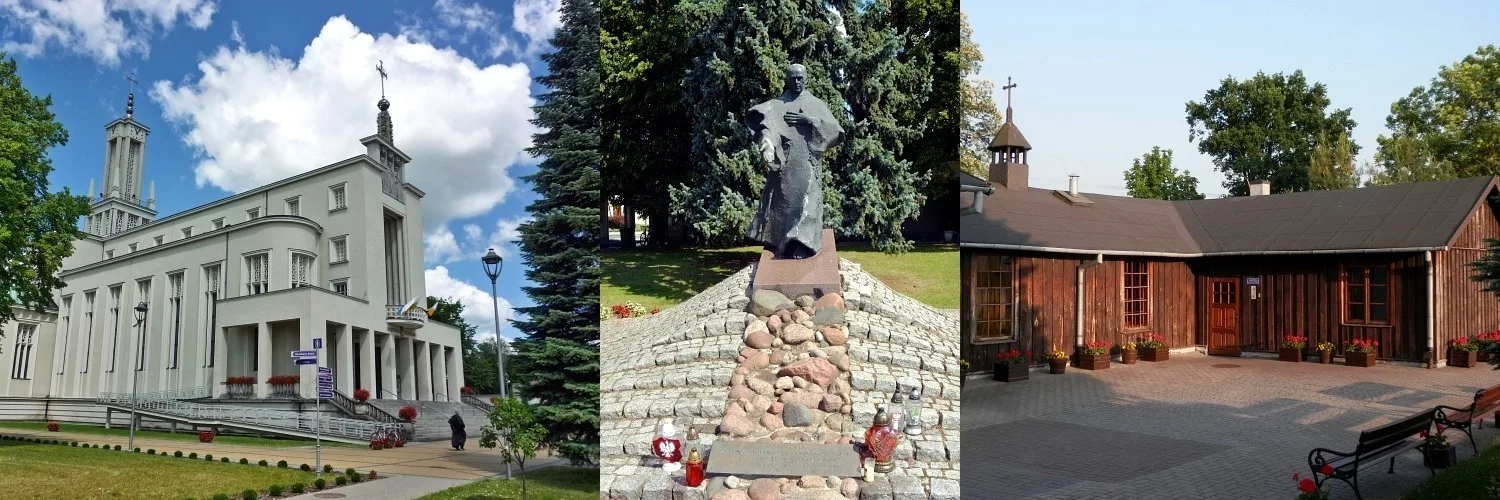
Minor Basilica in Niepokalanów, built in 1948-54 (e-guide)
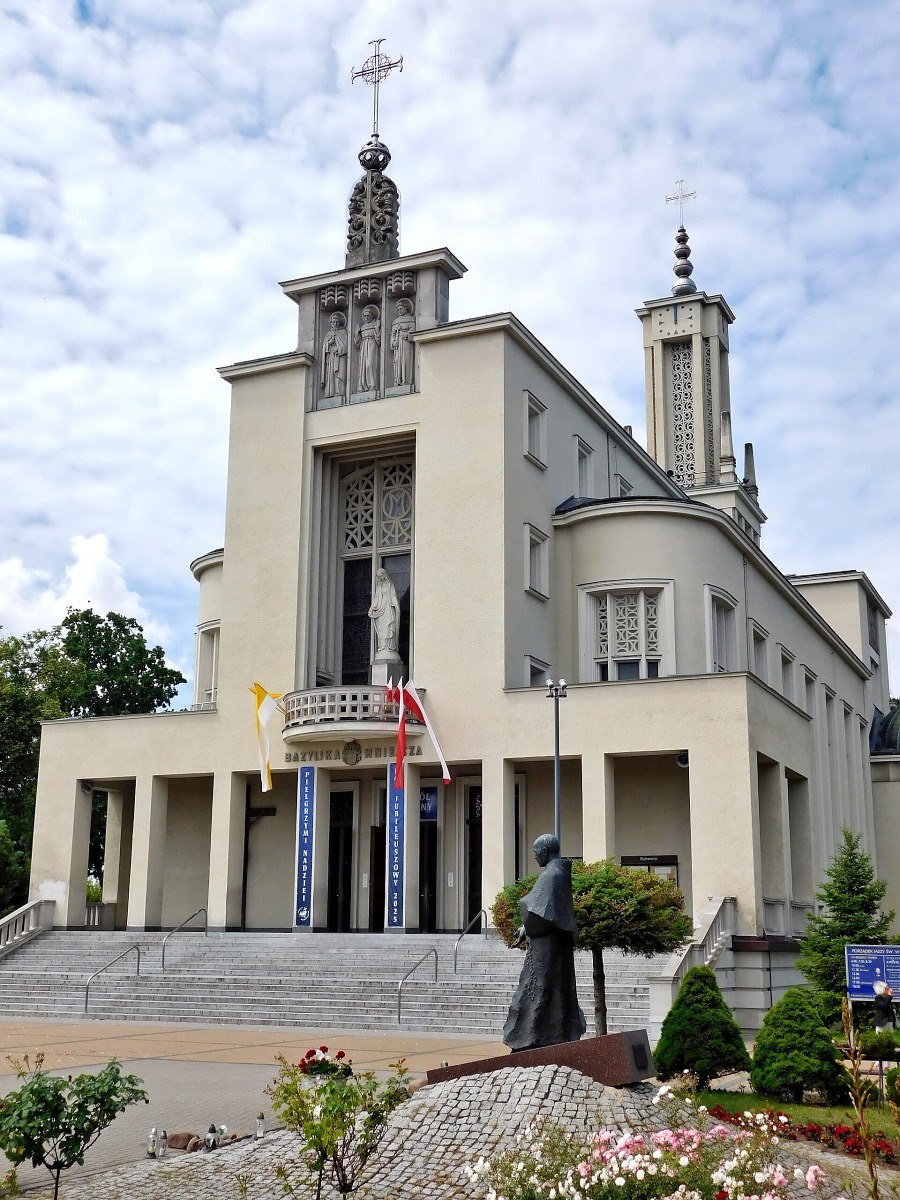
Upon crossing the gates of Niepokalanów, the pilgrim beholds the majestic silhouette of the temple, an edifice that towers over the entire monastic complex. The Basilica of the Immaculate Mediatrix of All Graces is no mere parish church or simple shrine; it is a sacred space where history, spirituality, and ceaseless prayer are woven into a single narrative. This modernist sanctuary, raised with great toil amidst the hardships of the post-war era, stands today as one of the preeminent spiritual and cultural heartlands of the Mazovia region.
* A Vision Stronger Than War
The need for a grand church in Niepokalanów first stirred in the hearts of the friars in the 1930s. The humble wooden chapel, erected years prior, could no longer shepherd the growing number of religious brothers and local faithful. Architectural plans were finalized and approved in Warsaw in December 1938. By May 1939, a cross was consecrated upon the site, and the first foundations were laid. Alas, the outbreak of the Second World War halted all progress, and the gathered building materials were plundered by the Nazi occupiers.
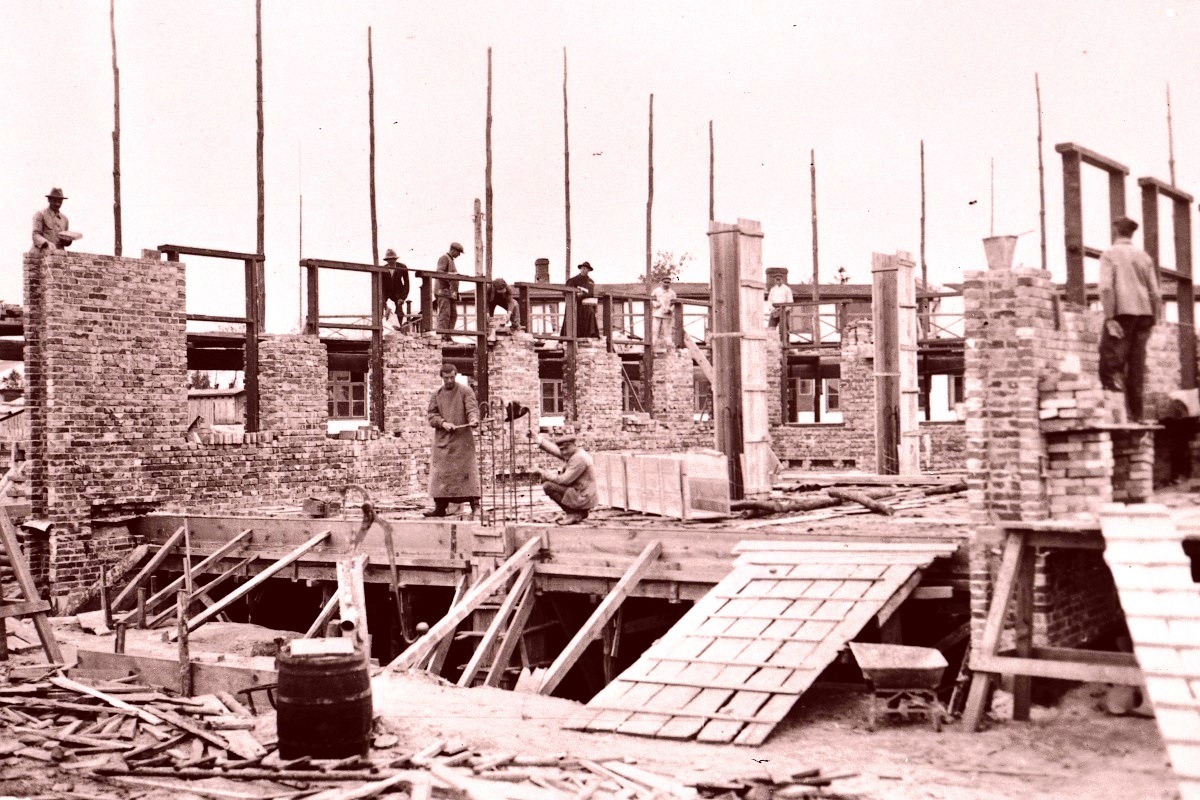
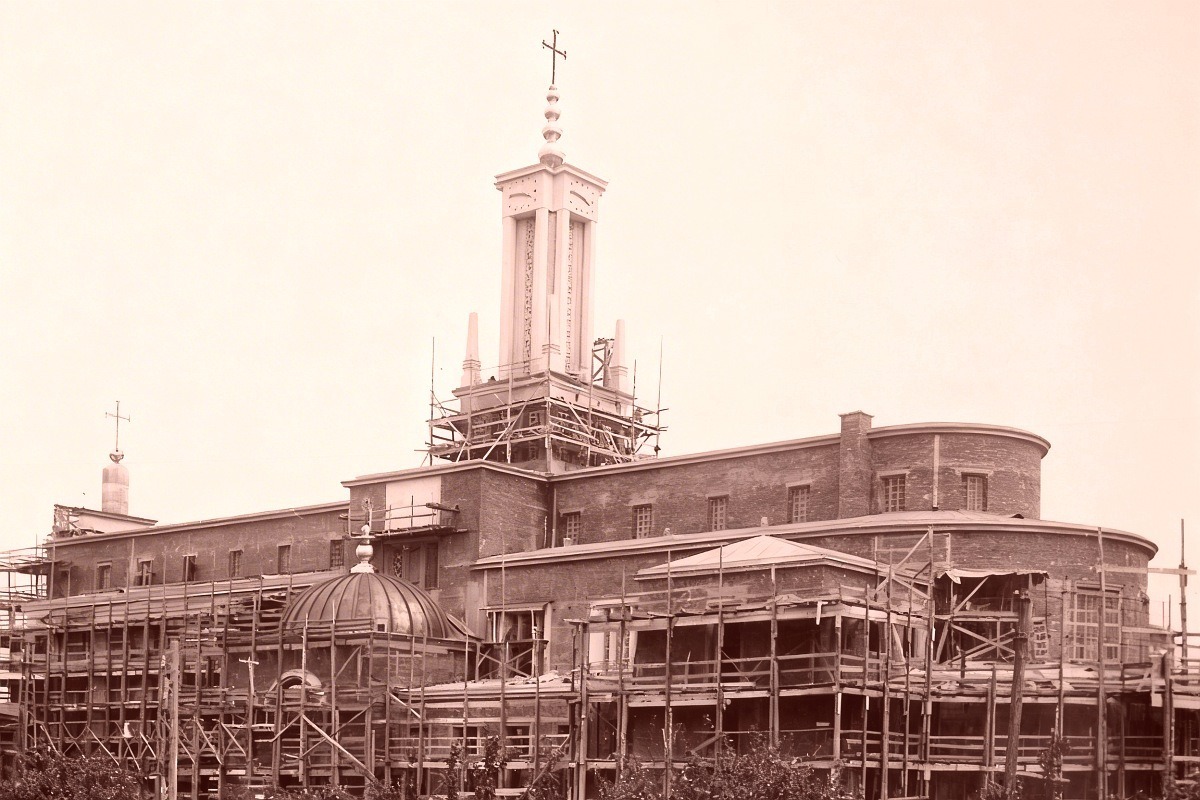
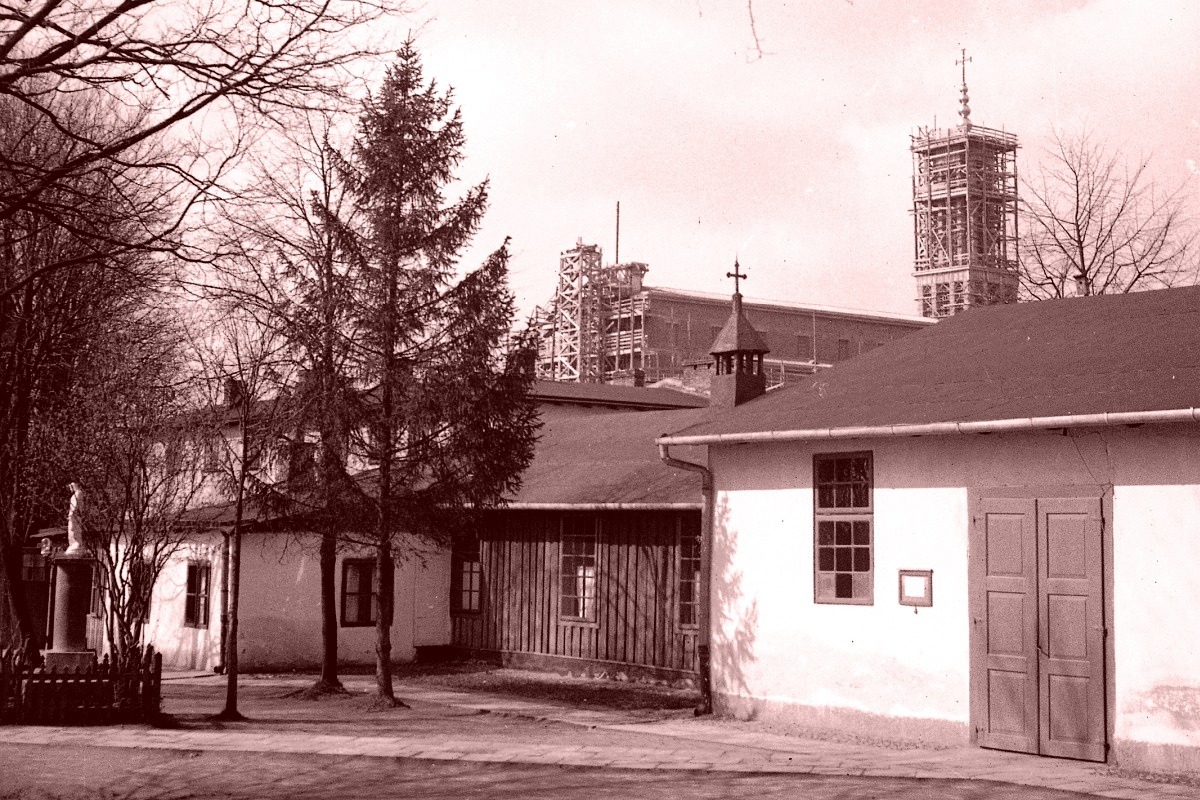
Following the war’s end, the brothers faced the daunting task of rebuilding the monastery and reviving their apostolate of the printed word. Yet, the vision of the temple did not fade; rather, it took on a profound new significance. After the martyrdom of Father Maximilian Kolbe in Auschwitz in 1941, his legacy began to draw vast multitudes of pilgrims to Niepokalanów. The necessity of a great church became undeniable. In 1948, under the guidance of the Krakow architect Zygmunt Gawlik, construction resumed. Despite acute shortages of materials, administrative burdens, and persistent trials, the Franciscan friars—supported by the devotion of the faithful—brought the work to fruition.
The construction utilized modern structural solutions for its time, yet great care was taken to ensure the edifice maintained Franciscan simplicity and clarity of form. The solemn consecration took place in October 1954. As the Primate of Poland, Stefan Cardinal Wyszyński, was then imprisoned by the communist authorities, the rite was performed by Bishops Wacław Majewski and Karol Niemira. From that moment, the church became the spiritual heart of the monastic community and the pilgrim path.
During a celebration in honor of St. Maximilian, Cardinal Stefan Wyszyński observed:
„Before the war, Niepokalanów grew in breadth and length. Then came the difficult post-war years, and the Franciscans, unable to pursue their former labors, did the wisest thing they could possibly do—they built a temple. They moved from the wide fields filled with barracks into the sanctuary, reminding the Order, the nation, and all of us of the most vital truth: 'To the temple! To strengthen the spirit upon our knees!'”
* Sacred Architecture. Modernism
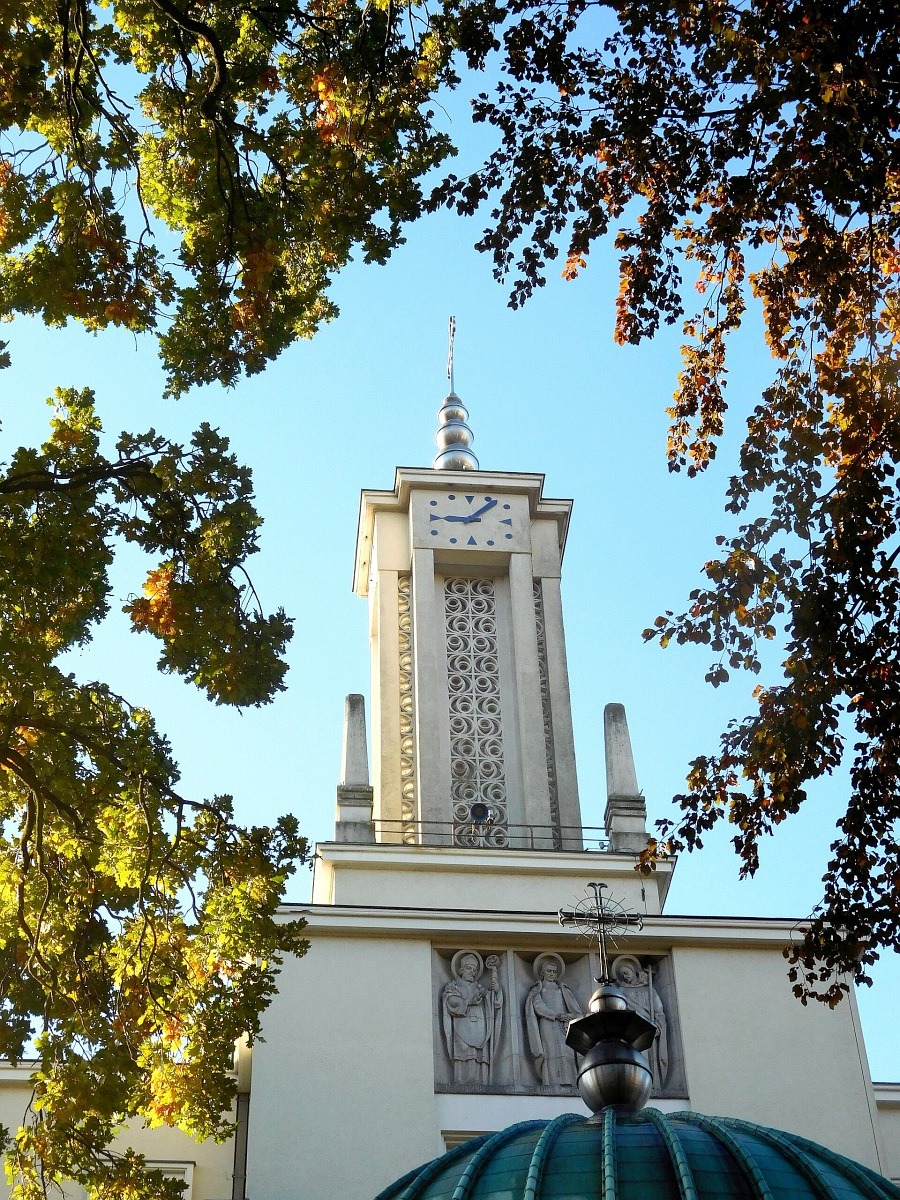
The Basilica is an oriented temple, designed in the Modernist style. Its proportions evoke a sense of awe: the interior stretches 69 meters in length, reaches 33 meters in width at the side chapels, and the nave rises to a height of 16 meters, creating a space of profound peace and dignity. The distinctive tower, reaching 47 meters toward the heavens, houses a clock with five dials and four bells named: The Knight of the Immaculate, Maximilian, Francis, and Anthony. The statue of the Immaculate placed above the main entrance is not merely an ornament, but a symbol of the spiritual identity of Niepokalanów: here, all paths lead to Mary, and through Her—to Christ.
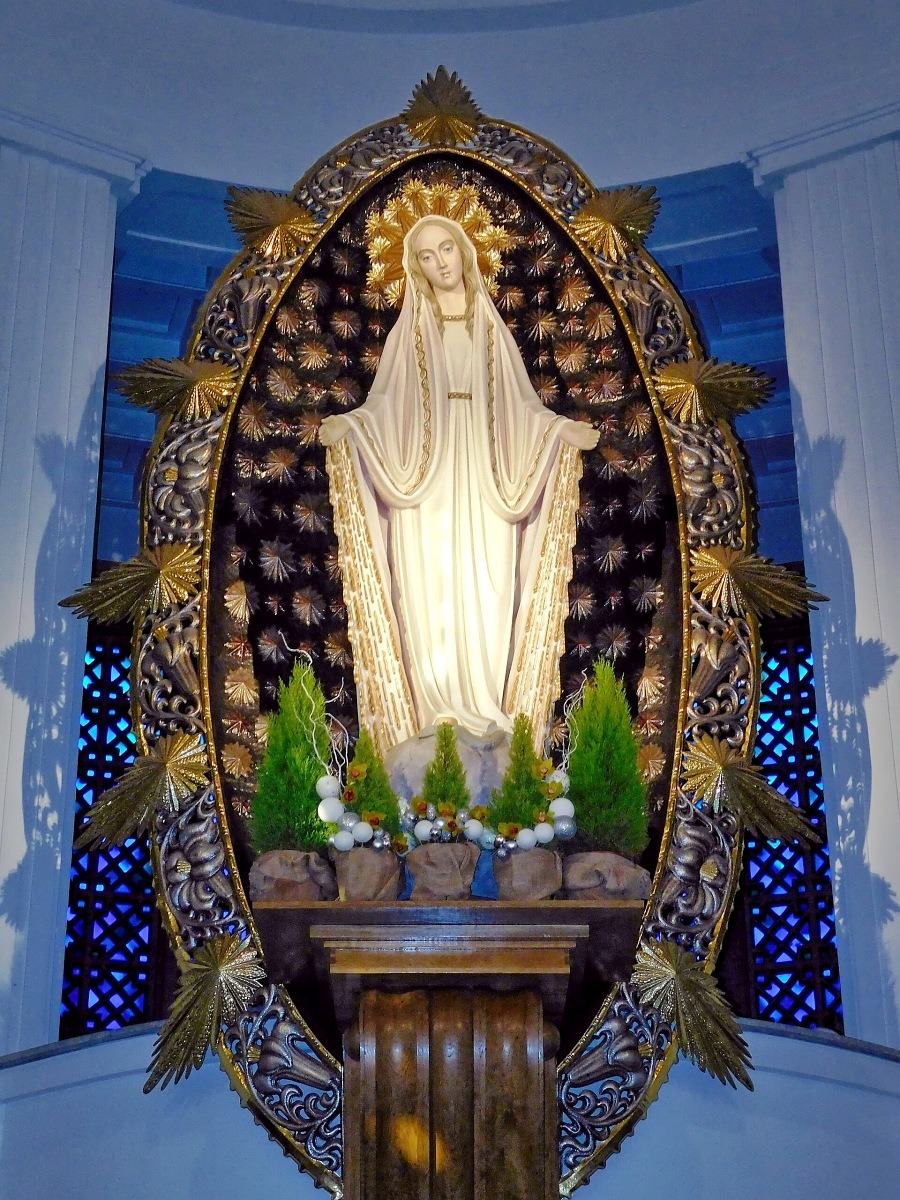
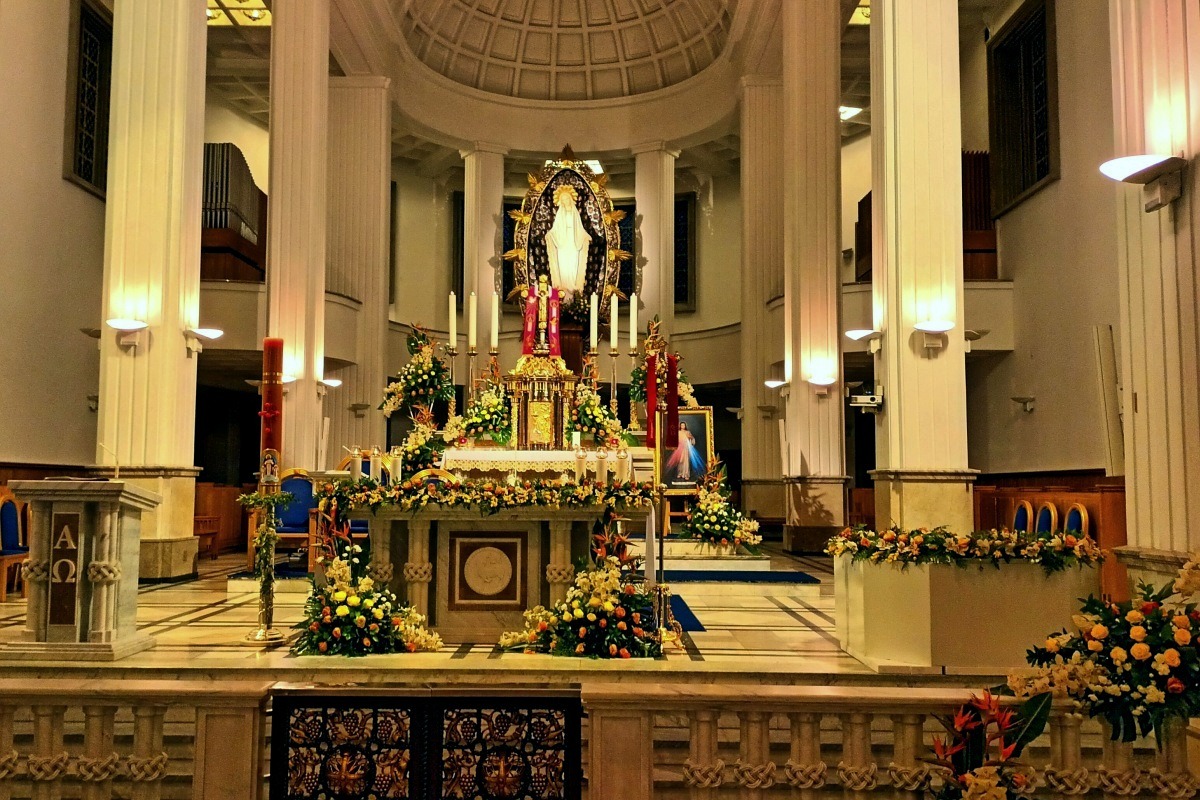
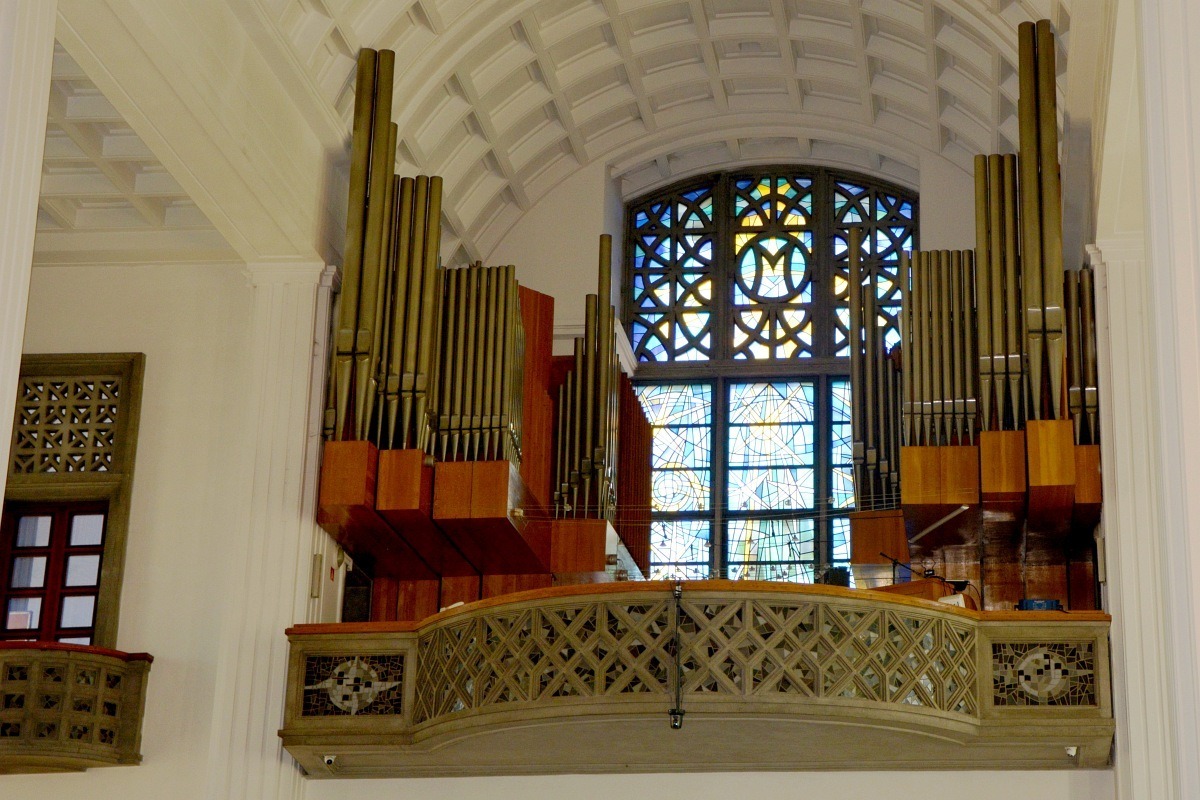
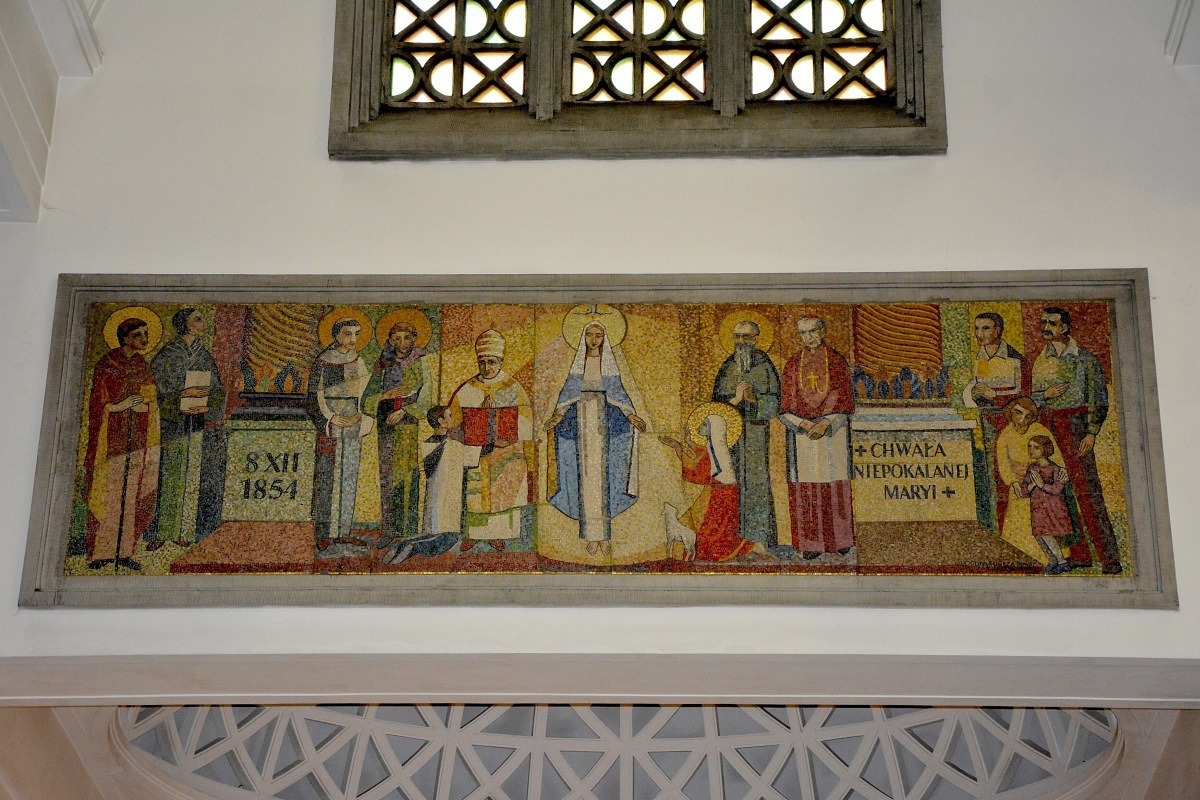
The interior is vast, bathed in the natural light that pours through large windows. The high altar, fashioned in light tones, draws the eye to the figure of the Immaculate Mediatrix of All Graces, the patroness of the sanctuary. In the nave, one finds the pulpit of white Tuscan marble, adorned with bas-reliefs of the Holy Trinity, the Four Evangelists, and Christ preaching from the boat. The Basilica is graced by two organs: a 16-stop instrument in the sanctuary and a 49-stop instrument in the choir. On the most solemn holy days, such as the Midnight Mass or Holy Week, the sanctuary and naves are illuminated by hundreds of lights, reflecting the joy of the liturgy.
* Prayer, Silence, and Reflection
Though over seventy years have passed since its completion, the Basilica remains as relevant as ever. In an age where many seek silence, meaning, and a spiritual anchor, Niepokalanów serves as a sanctuary of grace. The doors remain open throughout the day, allowing pilgrims to enter at any hour with their intentions and supplications.
The Basilica is more than a structure of stone and mortar; it is a testament to a faith that endured war, poverty, and persecution. It stands as a witness that the dreams of saints—even if they do not live to see them realized—can become a reality through the steadfast labor of their successors. Every pilgrim who crosses this threshold may find what they seek: prayer, silence, reflection, and at times, the answer to the questions held deep within the heart.
* The Chapels: from History to Peace
The Basilica encloses spaces of particular symbolic power:
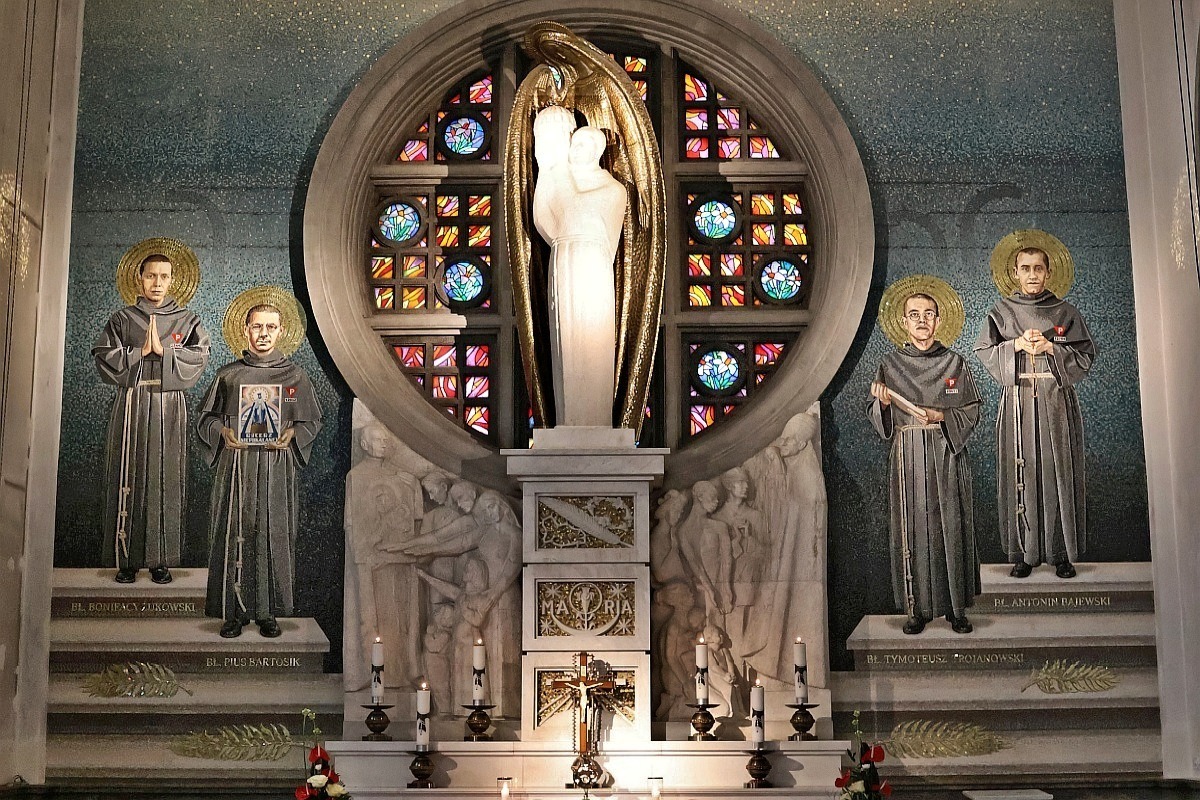
The Chapel of St. Maximilian (Left Transept): Centered upon a statue of the saint who, in a gesture of total sacrifice, offers the earthly globe to the Mother of God. The background is a mosaic commemorating the four Blessed Martyrs of Niepokalanów, companions of St. Maximilian (Fathers Pius and Antonin, and Brothers Boniface and Timothy).
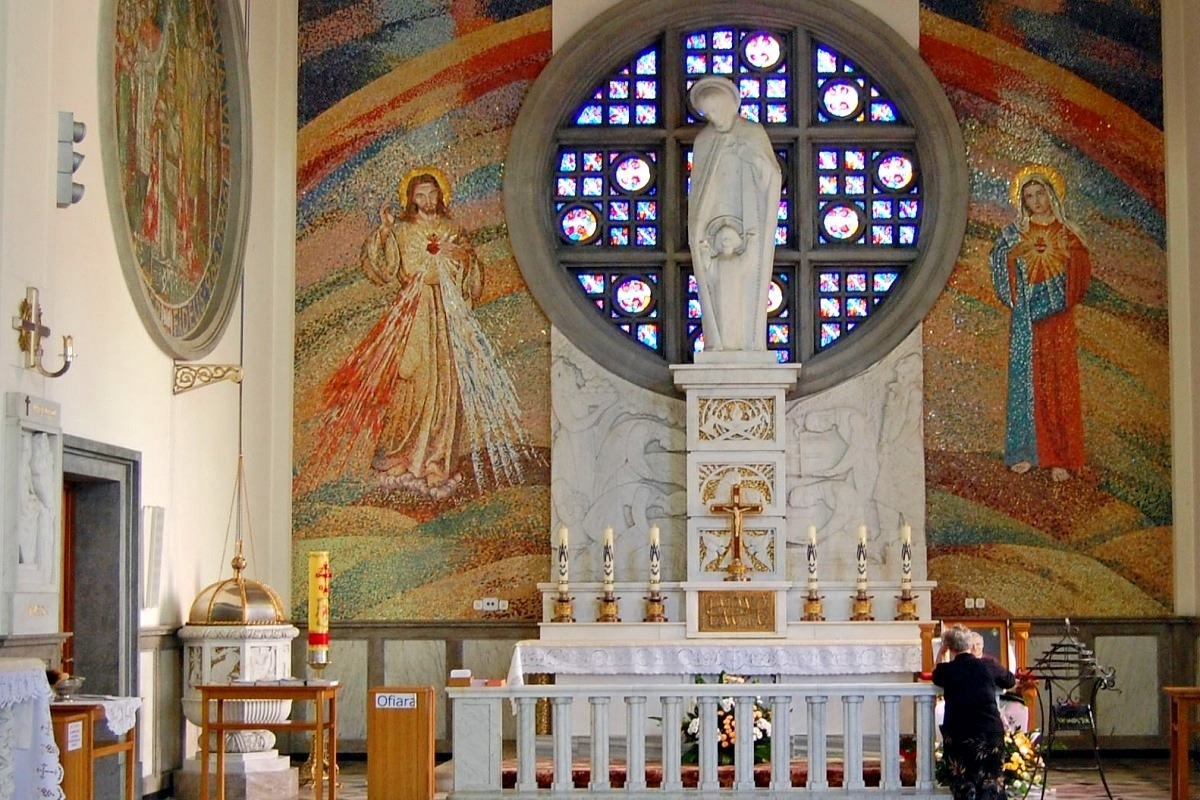
The Chapel of St. Joseph (Right Transept): Features a circular mosaic commemorating the Baptism of Poland, alongside figures of workers and farmers offering the fruits of their labor to God. In 2002, grand wall mosaics of Divine Mercy and the Immaculate Heart of Mary were added.
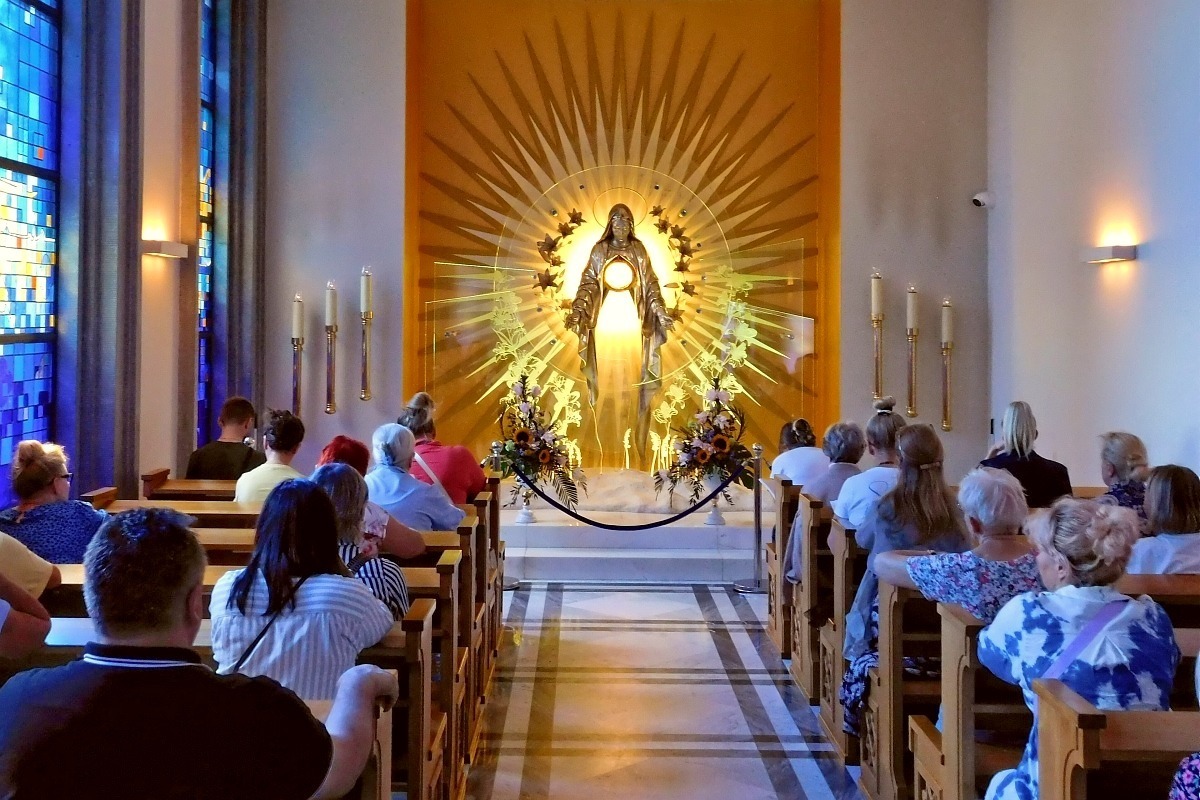
The „Star of the Immaculate” Chapel (South Wing): Since 2018, the Basilica has hosted a Chapel of Perpetual Adoration. It was established as one of the twelve global centers of prayer for world peace. Its unique altar, crafted from silver, gold, and crystal, is a masterpiece of sacred art.
* * *
= Powrót do strony głównej =
Zostaw komentarz
Musisz być zalogowany by dodawać komentarze.